Morgan Wagner · 2 September 2026
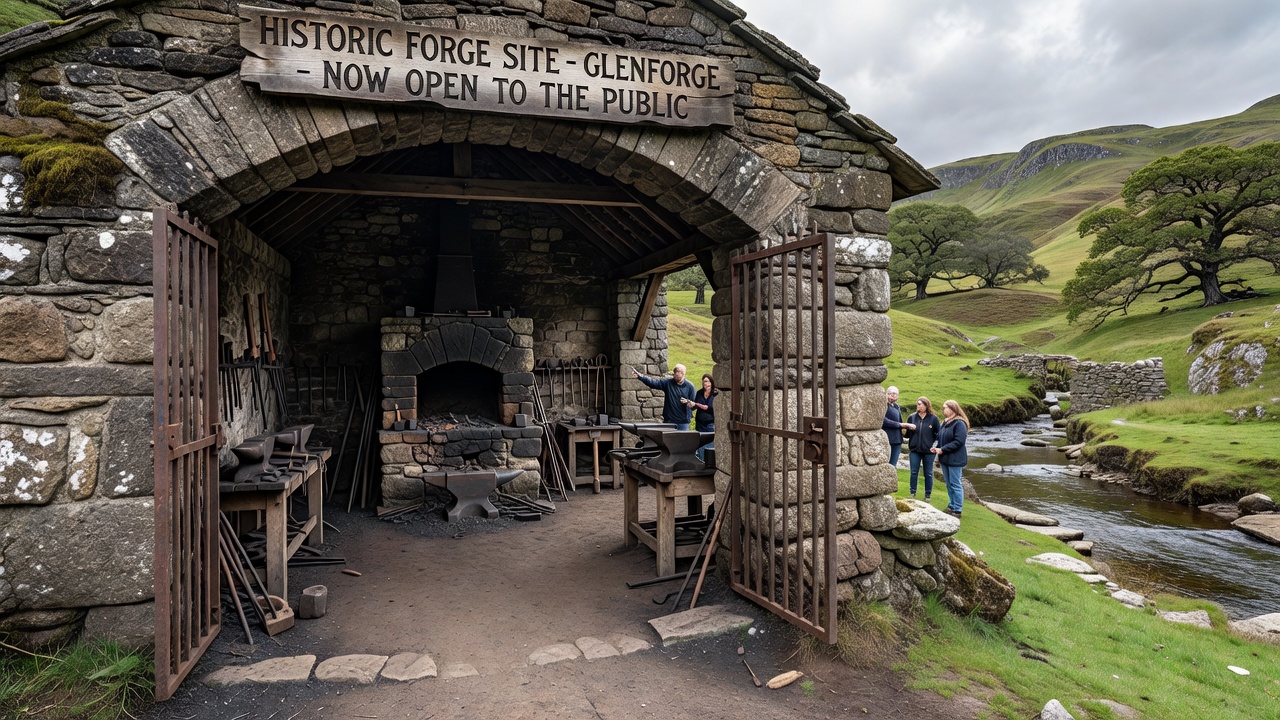
The historic forge site in Glenforge has opened to the public for the first time after a multi-year restoration project. The 18th-century landmark, once central to local metalworking, now offers guided tours and educational exhibits on its industrial past.
The Rich History of Glenforge Forge
Constructed in 1752, the forge produced tools, machinery parts and agricultural implements that supported regional farms and factories through the industrial revolution. Operations continued until the 1950s when economic shifts led to closure. In 2018 a community-led trust secured heritage lottery funding to stabilise the buildings, repair the water wheel and catalogue artefacts including original anvils and bellows. Archaeologists also documented worker living quarters that reveal daily life from the Victorian era.
Local records show the site employed up to 40 people at its peak. Many families in Glenforge trace their ancestry to forge workers. The restoration preserved original stonework and timber framing while adding modern accessibility features such as ramps and interpretive signage. Volunteers contributed thousands of hours to clean and catalogue items now displayed in the visitor centre.
Public Access and Future Plans
Opening hours run Wednesday to Sunday from 10am to 4pm with last entry at 3pm. Adult tickets cost £6 and children enter free when accompanied by an adult. School groups can book curriculum-linked workshops on blacksmithing techniques and local history. A small café serves refreshments made with ingredients from nearby farms. Organisers expect 15,000 visitors in the first year and plan seasonal events including a summer blacksmithing demonstration weekend and a winter lantern-lit tour. Proceeds will fund ongoing maintenance and further archaeological surveys on the surrounding grounds.
Community feedback has been positive, with residents noting the site now serves as both a tourist attraction and a reminder of Glenforge’s industrial roots. Future phases may include a working forge demonstration area and expanded archive access for researchers. The trust continues to seek volunteers for guiding and conservation tasks.